Loading...
Therapy for Children
When something's not quite right with your child, but you can't put it into words yet.
Play-based psychodynamic therapy for children aged 4–12, in person in Colchester. For anxiety, behavioural changes, school difficulties, family transitions, neurodiversity, and the things children can't say but can show.
When parents bring children to me
You've noticed something. Maybe sleep has changed — nightmares, bed-wetting that had stopped, trouble settling. Maybe there are meltdowns that seem to come from nowhere, or a withdrawal from friends and activities they used to love. Maybe school is calling, or you're getting reports that don't match the child you know at home.
Often parents can't point to a single trigger. Sometimes they can — a separation, a bereavement, a move, something that happened at school. Either way, the child in front of them is struggling and the usual parenting approaches aren't landing.
Children don't have the words adults do. When something is wrong, they show us through behaviour — through tantrums, through silence, through regression, through changes that are hard to explain. This behaviour is communication. Therapy gives them a space to work through what they can't say.
What I often work with
Every child is different, but these are some of the difficulties that bring families to me:
- Anxiety and worry— including separation anxiety, social anxiety, fears that don't seem to shift, and worry that's affecting daily life
- School-related difficulties — refusal, avoidance, trouble settling, friendship problems, bullying, difficulty with transitions
- Family transitions — separation, divorce, blended families, new siblings, bereavement, moving house
- Behavioural changes— withdrawal, anger, aggression, regression, changes that don't seem to have an obvious cause
- Sleep difficulties and night fears — nightmares, trouble settling, bed-wetting that had stopped, night terrors
- Neurodiversity — ADHD, autism, sensory processing differences. I work affirmatively with neurodivergent children
- Trauma and difficult experiences — hospital stays, accidents, frightening experiences, things that happened too early to remember clearly
- Self-confidence and self-esteem — children who seem to carry a sense that something is wrong with them
- The things you can't quite put into words— when you just know something's not right
How I work with younger children
Children don't sit on a couch and talk about their feelings the way adults might. A 7-year-old can't articulate "I'm anxious because I don't feel secure since you and Dad separated." But they can show you — in a sand tray, in the way they play with toys, in the stories they make up, in what they draw without being asked.
This isn't entertainment, and it isn't a distraction technique. Play-based psychodynamic therapy uses play as the language it is. I watch, I follow, I sometimes name what I'm noticing. Over time, children work through what they can't say in words.
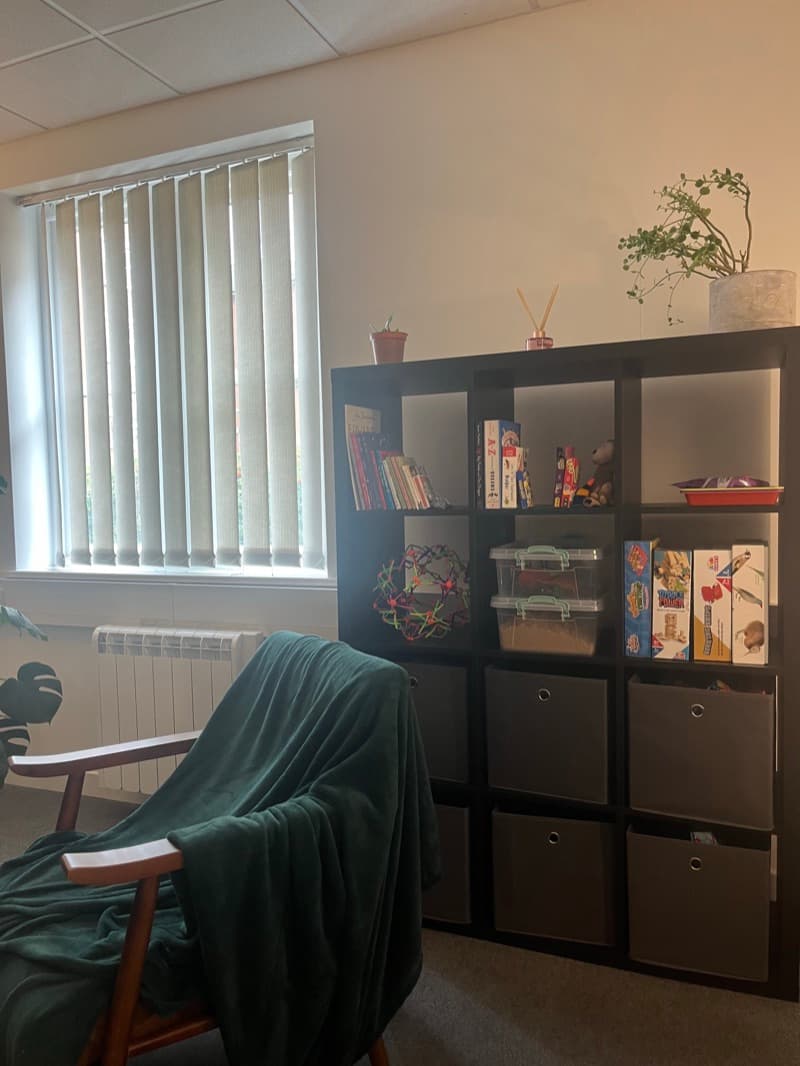
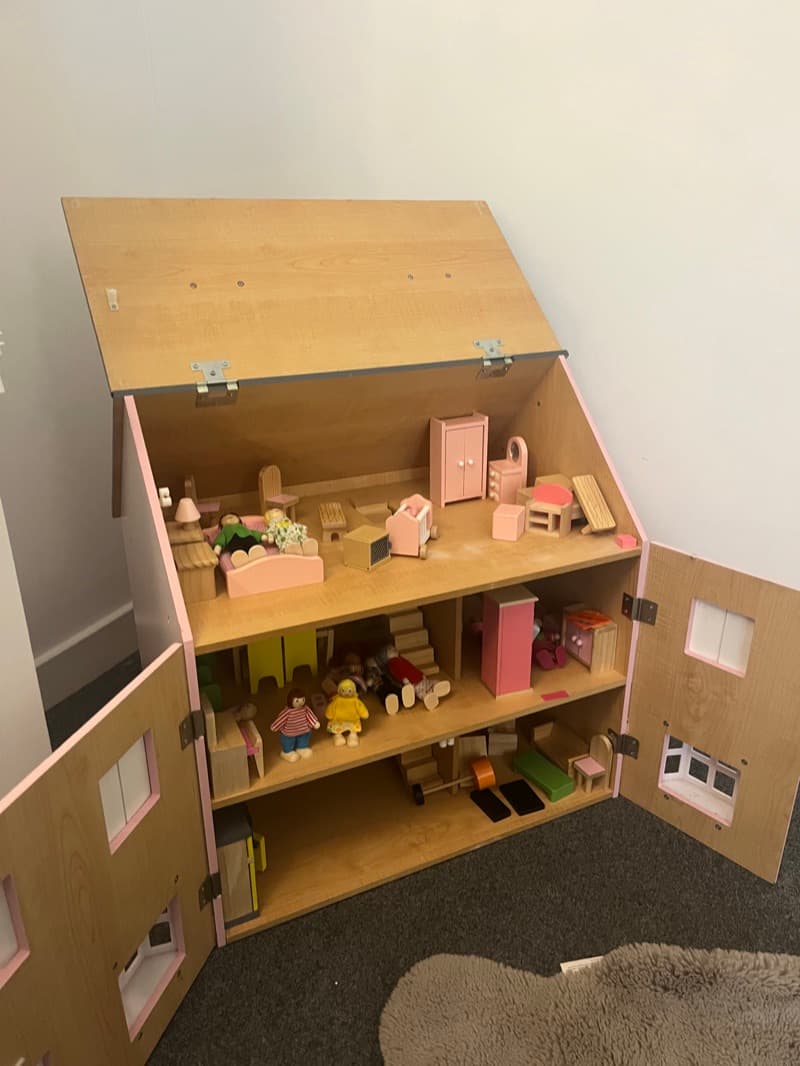
My therapy room at Colchester Business Centre is set up for children. Ground floor, quiet, plants, soft lighting. There's a sand tray, drawing and art materials, puppets, small-world toys, and sensory objects. Fidgets are available for any age, and stimming is welcomed — this matters especially for neurodivergent children who need to move to think.
What sessions actually look like
Sessions are 50 minutes, weekly, at the same day and time each week. This consistency matters — children feel safer when they know what to expect.
For younger children, a parent or carer brings them to the waiting area and collects them afterwards. I'll briefly check in with you at the start and end — not to discuss content, but to flag anything you think I should know or anything I think would help at home.
There's no script for what happens inside the room. Some children arrive ready to play. Others need time to settle. Some talk constantly; some barely speak for weeks. All of this is normal and all of it is part of the process. I follow your child's lead rather than imposing an agenda.
Therapy is open-ended — we work for as long as your child needs, not to a fixed number of sessions. Endings are planned carefully and worked through together when it's time.
For parents: how I work with you
Parents are part of the work, not on the sidelines.
Before I meet your child, I'll have an initial conversation with you — either by phone or in person — to understand the full picture. What you've noticed, when it started, what you've tried. Your child's history. What you're hoping might shift. This gives me context and gives you space to share things you might not say in front of your child.
Throughout the therapy, I offer parent review meetings— regular sessions without your child present. I won't share the specific content of their sessions (that stays confidential), but I'll discuss general themes, how things seem to be progressing, and what might help at home.
If you're struggling yourself — if your child's difficulties are affecting your own wellbeing, your relationship, your capacity to cope — I also offer parent-only sessions. Sometimes the most useful thing is for you to have your own space.
I've worked with children and families in schools and community settings across Essex and Suffolk — including NHS Essex (workshops in primary and secondary schools), Sir Bobby Robson School in Ipswich (SEN-specific provision), Mind Mid & North East Essex (youth work), and ongoing work with YMCA supporting primary school children and young people in supported accommodation.
Working with school and other professionals
With your consent, I can liaise with your child's school — their class teacher, SENCo, or ELSA. I can write letters for EHCP applications or reviews if therapy observations would be useful. I'm also happy to coordinate with other professionals involved in your child's care — paediatricians, occupational therapists, speech and language therapists — where that helps.
This only happens with your explicit agreement. You're always in control of who I speak to and what information is shared.
What I don't work with at this age
There are some situations where a different kind of support is more appropriate:
- Acute crisis or active risk.If your child is in immediate danger, actively self-harming, or experiencing a mental health crisis, they need a crisis team — CAMHS, A&E, or your GP. Private weekly therapy can't provide the wraparound support a child in acute crisis needs. Once they're stable, we can talk.
- Online therapy for under-16s.I only offer online sessions to clients aged 16 and over. For children, the work needs to happen in person — play-based therapy doesn't translate to a screen, and confidentiality is harder to maintain when a child is at home. Learn more about online therapy and who it's for.
If your child is in crisis right now
If your child is in crisis or you're concerned about their immediate safety, please contact:
- NHS 111111 (press option 2 for mental health crisis) — 24/7
- Your GPfor same-day emergency appointments
- A&E at Colchester General Hospitalfor immediate danger or medical emergency
- Childline0800 1111 — free, confidential support for children and young people
Therapy is part of the longer-term picture, not the right tool for an emergency.
Questions parents often ask
How do I know if my child needs therapy?
Consider it if your child is experiencing persistent difficulties that interfere with daily life — anxiety that prevents school attendance, behavioural changes lasting more than a few weeks, difficulty processing a difficult event, or expressing feelings of hopelessness. Trust your instincts. You don't need a diagnosis or a formal referral to get in touch.
My child is very shy. Will they be able to engage?
Shy children often do well in therapy once they feel settled and safe. I allow time for building trust and never pressure children to talk. Many shy children find it easier to express themselves through drawing, toys, or sand play rather than conversation — and that is just as valid.
My partner and I disagree about whether our child needs therapy. What should we do?
The free 15-minute call is partly for situations like this. It gives both of you a chance to ask questions and understand what therapy actually involves before anyone commits to anything. Sometimes one parent is more worried while the other prefers to wait and see — that's worth a conversation.
How will I know if therapy is working?
Progress looks different for each child. You might notice improved mood, better sleep, less anxiety at school drop-off, or a child who seems lighter. Sometimes things feel harder before they improve as children process difficult feelings. We'll discuss what progress looks like for your child in our parent review meetings.
Start with a parent-only conversation
The free 15-minute call is just for you. A chance to tell me what's happening, ask any questions, and see whether I might be the right fit for your child. No pressure, no commitment, and your child doesn't need to be involved yet.
Book a Free 15-Minute CallLast updated: